Initial management and treatment options
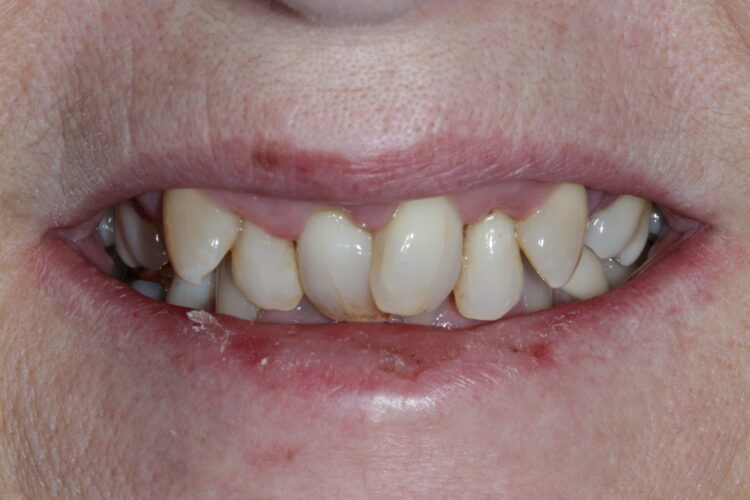
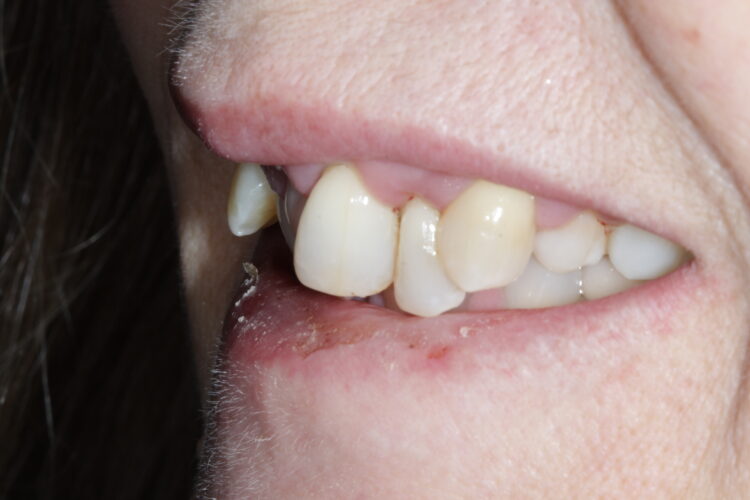
Given the patient’s clinical presentation and expectations, a multi-disciplinary approach was adopted. The first year of treatment was dedicated to non-surgical periodontal therapy under the care of both a specialist periodontist and a hygienist team. The main challenge was patient compliance, which required considerable effort to improve oral hygiene routines and increase motivation.
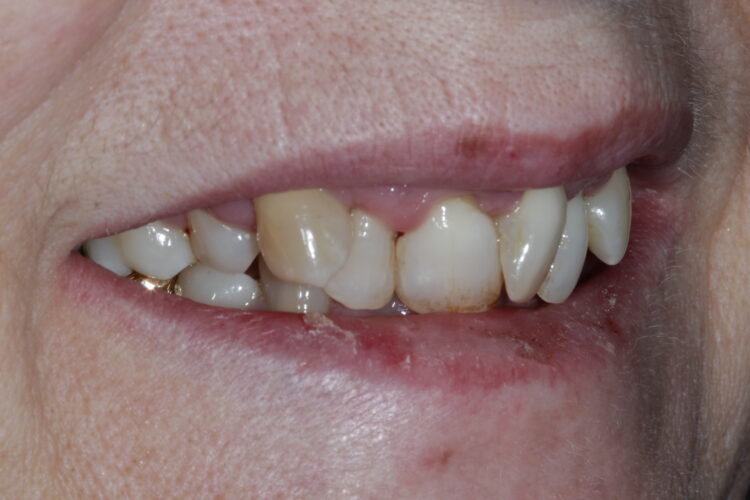
Once periodontal stability was achieved, a restorative-led plan was considered. Orthodontics remained contraindicated due to the residual mobility and structural loss in the upper anterior region. After discussion, the patient consented to the extraction of the upper four anterior teeth and replacement via fixed prosthodontics.
Treatment steps
1.Periodontal treatment was conducted over 12–14 months, involving deep cleaning, monitoring and behaviour change support to establish stable periodontal health.
2. Following stabilisation, the upper four anterior teeth were extracted.
3. A temporary acrylic six-unit anterior bridge was fitted to allow for soft tissue healing and occlusal adjustment over a three-month period.
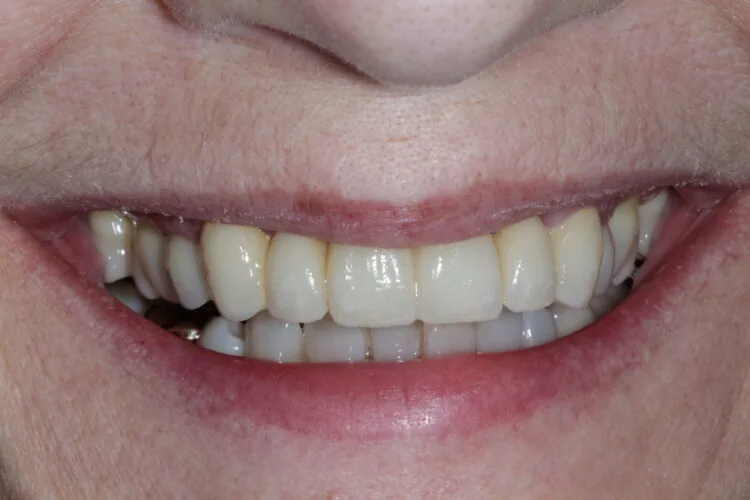
4. After this phase, a definitive six-unit porcelain bridge was placed to restore aesthetics and function.
5. To complete the smile enhancement, porcelain veneers were placed on the premolars to increase the buccal corridor fill and broaden the smile.
Outcome
The final result delivered a dramatic transformation. The bridge and veneers blended naturally, restoring symmetry and confidence to the patient’s smile. Upon seeing the result for the first time, the patient was visibly emotional and described the outcome as far exceeding her expectations.